
Sensing / Presence Sensor
How a room knows you’re there
A light should stay on while you sit still. Here’s how the Presence Sensor approaches that small problem without taking a picture.
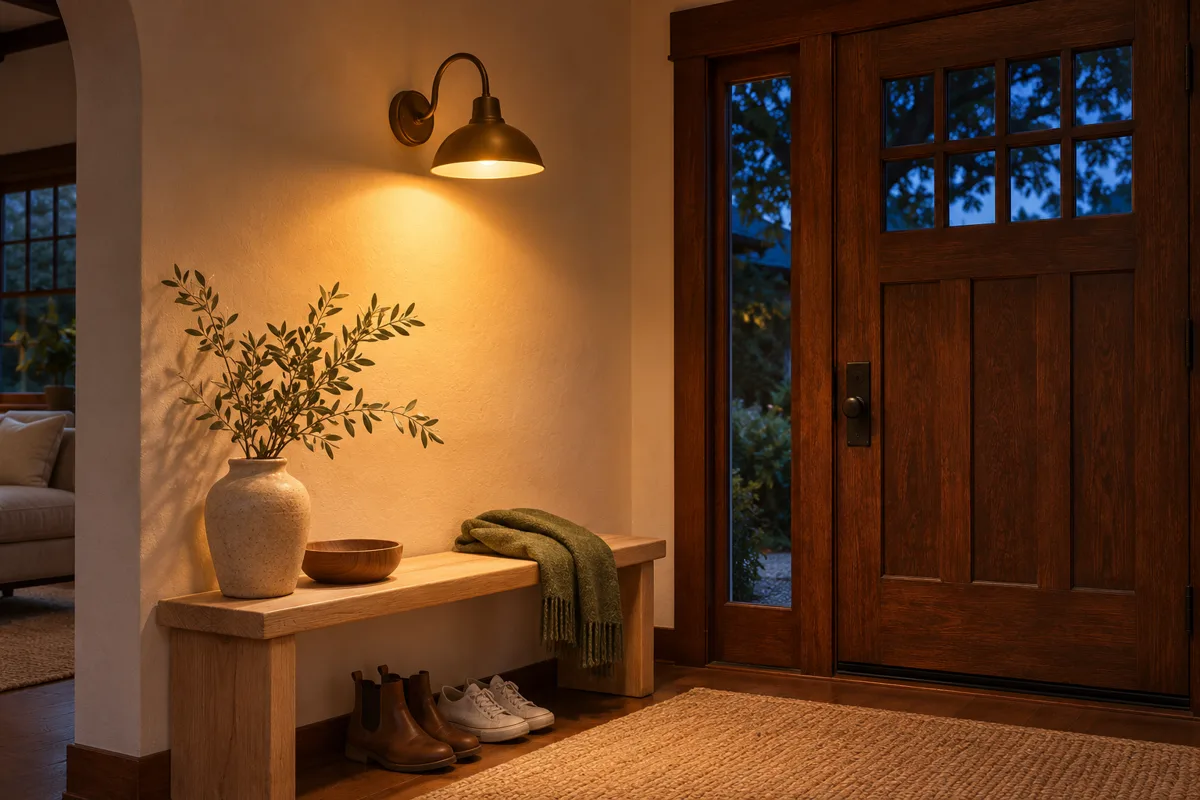
Start with someone sitting still
Think about coming home after dark. You open the door, sit on the bench, and bend down to untie a boot. Walking through the door was easy to notice. The interesting part is what the light does while you’re still on the bench.
Abrasax’s Presence Sensor uses 24 GHz millimeter-wave radar. Reflections change as things move in front of it. The sensor processes that signal locally and can report presence without producing an image of the room.
Give the signal a modest job
For an entryway, the useful question is whether the space is occupied. A lighting routine can use that answer to keep a light on. It has no need for a face, a name, or a recording of somebody taking off their shoes.
Write the intended behavior down before choosing a mounting spot. Should the bench count as part of the entryway? Should someone walking past the open door count? Those two decisions tell you where to begin testing.
Try it from the bench
Walk the usual route, sit down, and check how the reading changes. Then repeat the exercise just outside the doorway. If the two spaces are hard to distinguish, revisit the placement and the delay before lights switch off.
Keep the switch within reach. Someone coming home with wet hands or a full bag should still be able to choose the light they want.