
Environment / Environment Node
Four ways to read a room
Temperature, humidity, air quality, and ambient light each tell a different story about the same room. Placement is part of the reading.
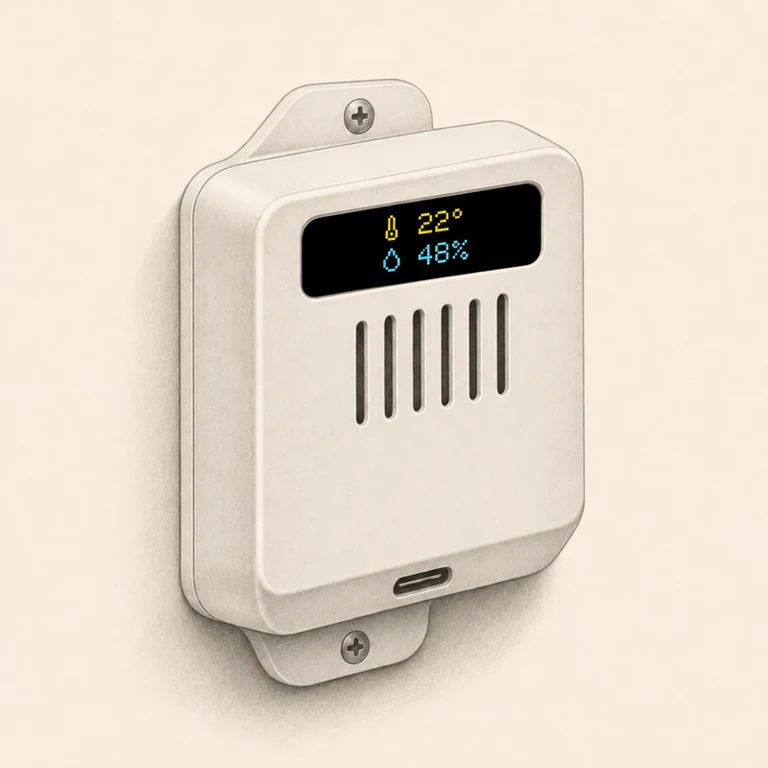
Choose a place before choosing a threshold
Put an indoor sensor in a patch of afternoon sun and it will describe that patch of sun. That might be useful for a plant shelf. It is less useful if your question is what the room feels like at the desk.
The Environment Node is a USB-C powered indoor sensor for temperature, humidity, air quality, and ambient light. Choose a position that matches the question you want to answer. Keep a note of where you put it.
Watch an ordinary day
Read the same spot with the curtains open and closed, or before and after a window opens. Notice which readings respond immediately and which drift. A single number gives you a point in time. A few observations tied to what actually happened in the room give you a pattern.
Avoid moving the node while comparing one part of the day with another. If you do move it, mark the time. An apparent change in the room may simply be a change in the place you are measuring.
Give each reading a purpose
A desk lamp might respond to ambient light. A temperature trace might help you decide where to put a worktable. Pick one decision the reading can help you make, then see whether it still helps after a week of ordinary use.